Photography
Julia Margaret Cameron
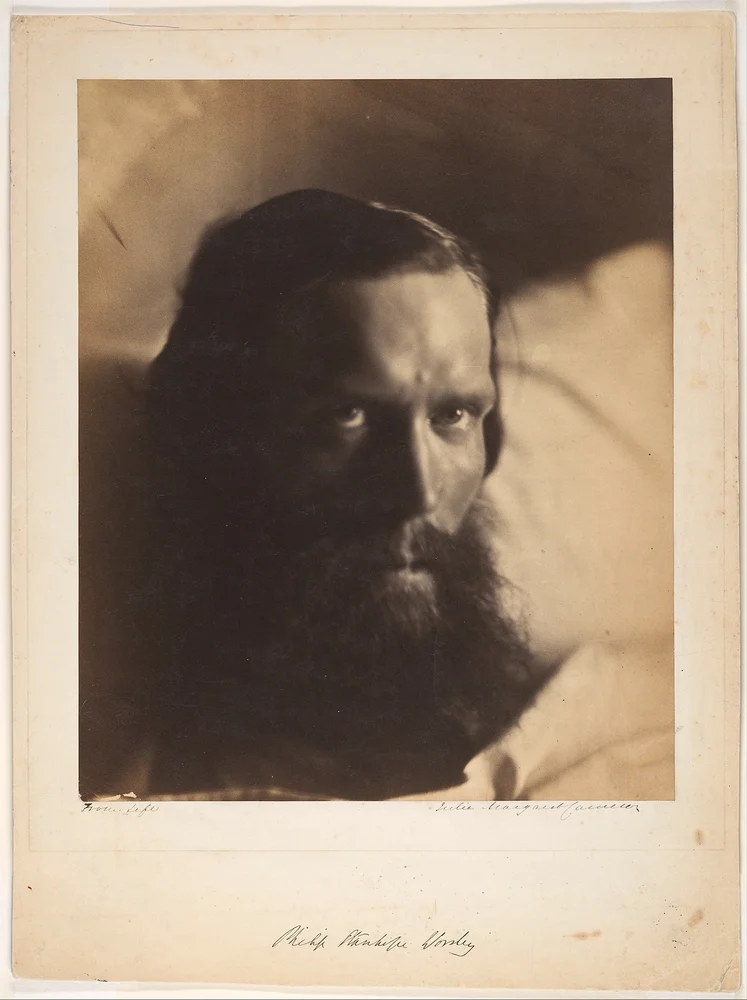
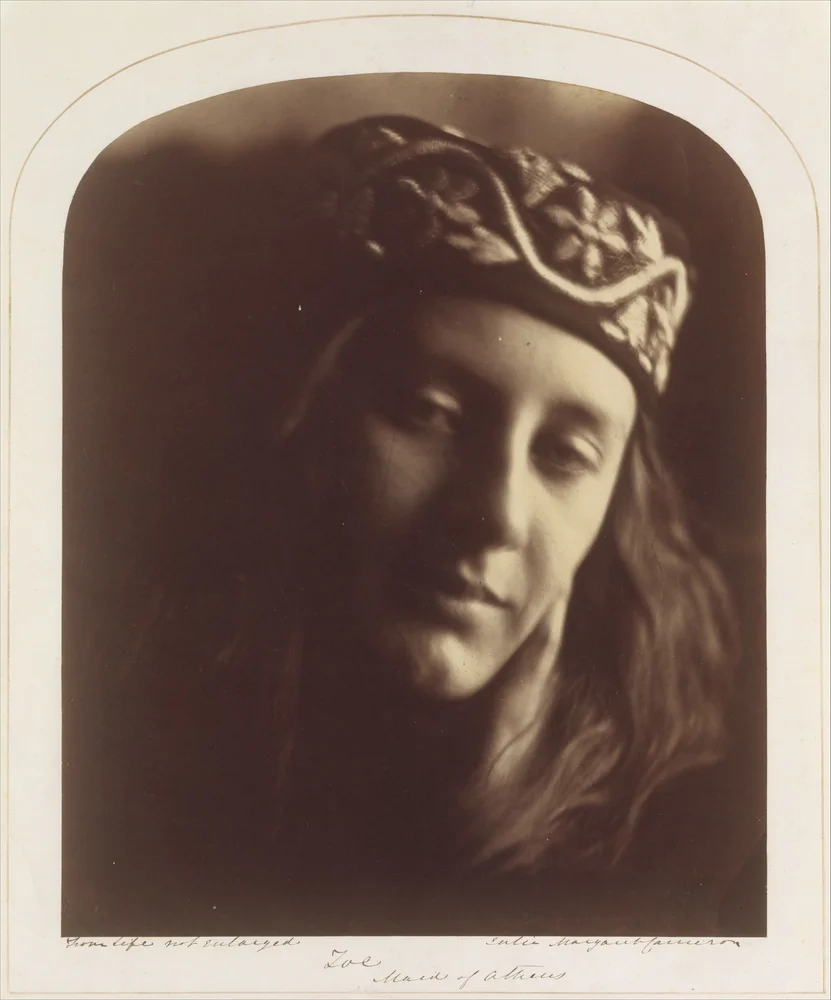
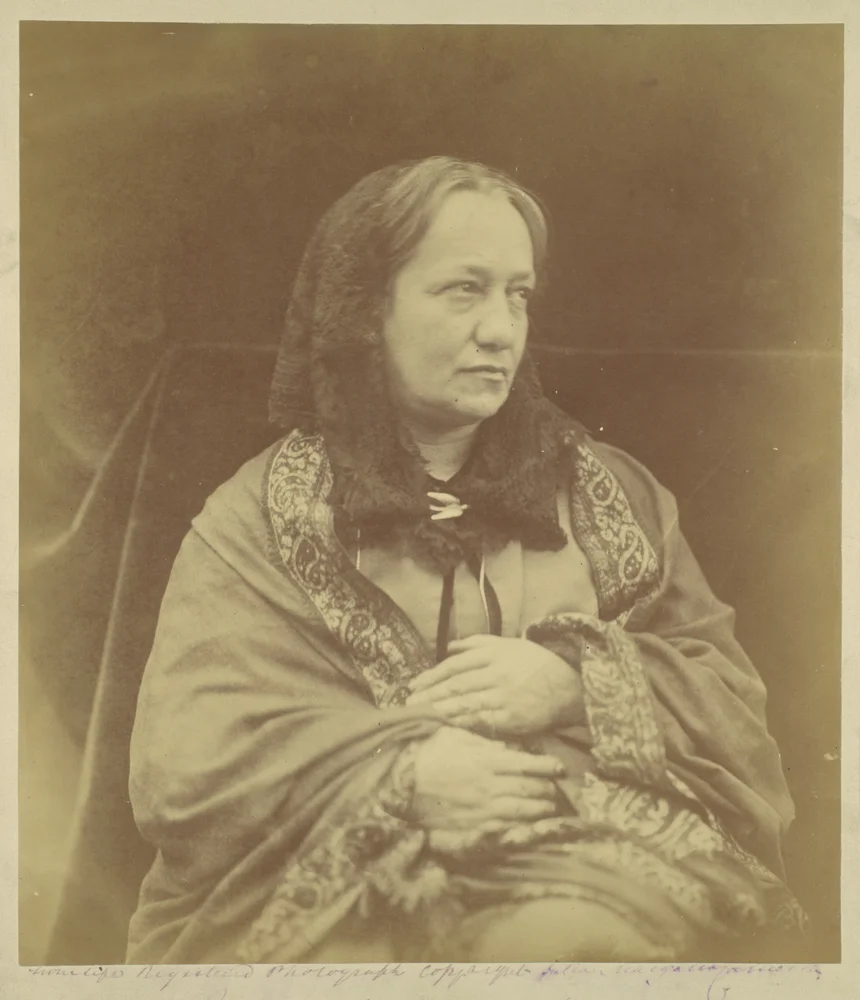
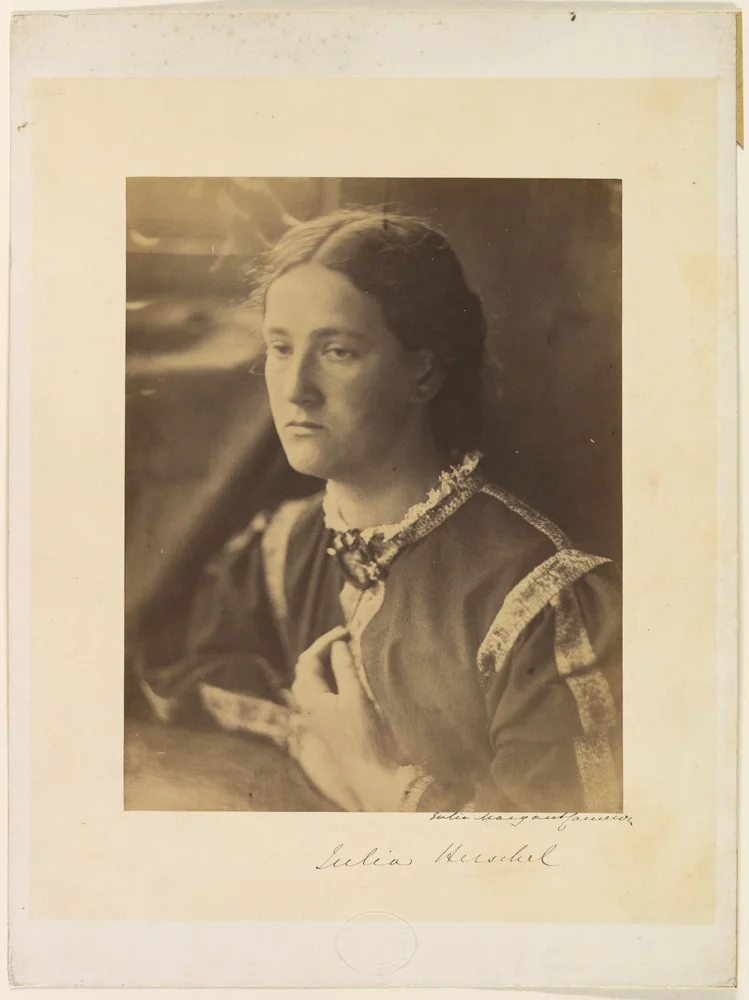
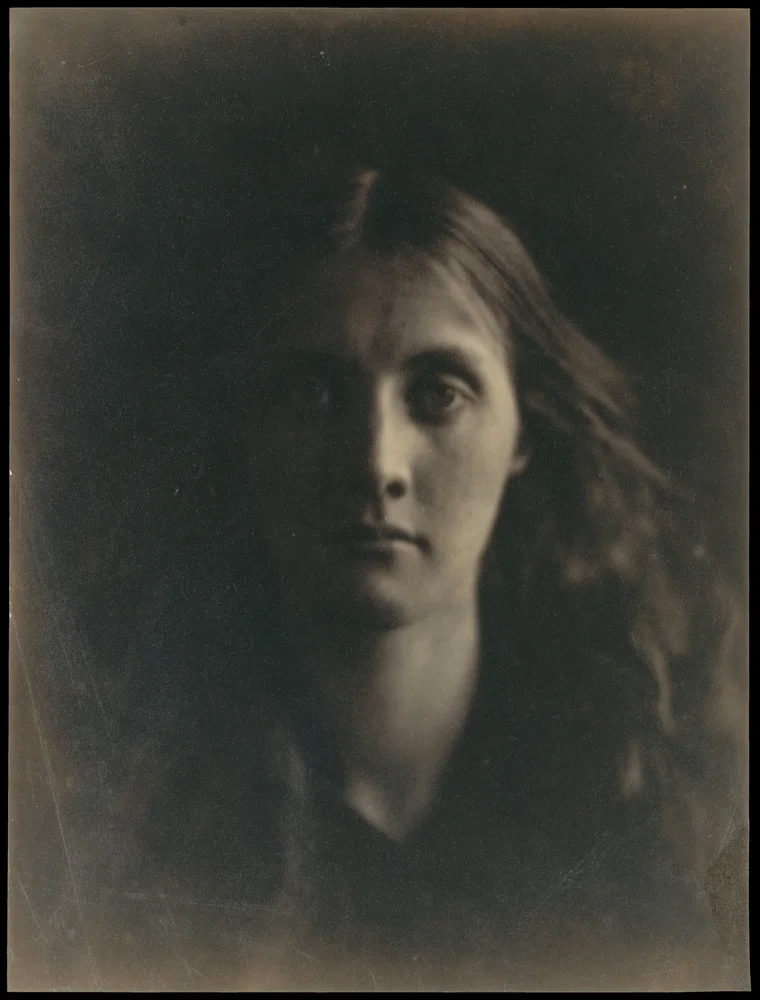
Julia Margaret Cameron (1815–1879) was an English photographer, born in Calcutta, who is widely considered one of the most important portraitists of the 19th century. She took up photography in December 1863 at age 48, when her daughter gave her a camera as a gift at their home in Freshwater on the Isle of Wight, and in just over a dozen years produced roughly 900 images—a gallery of vivid portraits and a mirror of the Victorian soul. Working with wet collodion on glass plates, she created mesmerizing soft-focus close-ups of eminent Victorians (including Tennyson, Darwin, Carlyle, and Sir John Herschel) and allegorical figure studies on literary, biblical, and classical themes, often costuming family, friends, and household staff as if for an amateur. Her artistic goals—"to ennoble Photography and to secure for it the character and uses of High Art"—were wholly original in the medium. While her deliberately blurred, unretouched prints drew ridicule from the contemporary photographic establishment, who derided their technical "out-of-focus" quality, artists and critics recognized their "daring originality," and her work is credited with producing some of the first close-up photographs in history. Cameron's portraits have been celebrated as "extraordinarily powerful," and she is now honored as a pioneering figure who helped elevate photography into fine art, with major retrospectives at institutions like the Metropolitan Museum of Art and the Victoria and Albert Museum, as well as induction into the International Photography Hall of Fame in 2019